



What makes an office luxurious today? It is rarely just expensive furniture or an impressive lobby. The most luxurious offices in the world combine architecture, comfort, technology, amenities, brand identity, and spaces designed around how people actually use the workplace.
The 13 examples below include corporate headquarters, influential office interiors, and premium commercial buildings from different periods. This is not a definitive ranking. Each was selected because it offers a distinct lesson in workplace design, from biophilic environments and adaptive reuse to landmark architecture and smart building technology.
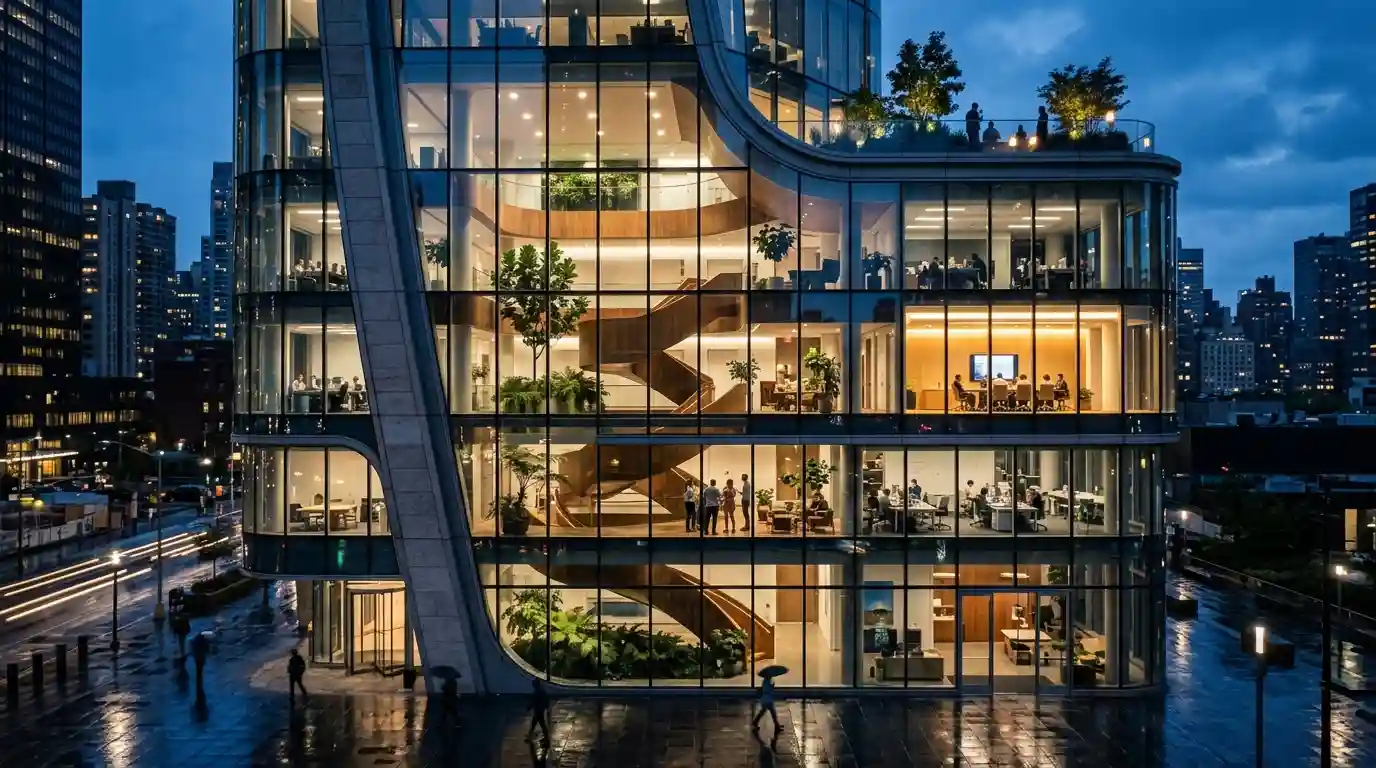
Luxury office design has moved beyond polished surfaces, expensive furniture, and oversized executive suites.
The strongest workplaces balance visual quality with practical decisions about light, acoustics, circulation, collaboration, privacy, technology, and employee amenities.
An office does not need every feature on this list. A smaller commercial workplace can improve significantly through better lighting, more useful meeting spaces, clearer circulation, acoustic planning, and finishes that suit the business.
For Toronto and GTA businesses, these principles offer a useful way to evaluate workplace ideas without simply copying the scale or cost of global headquarters. The focus should be on which design decisions improve how the space actually functions. .
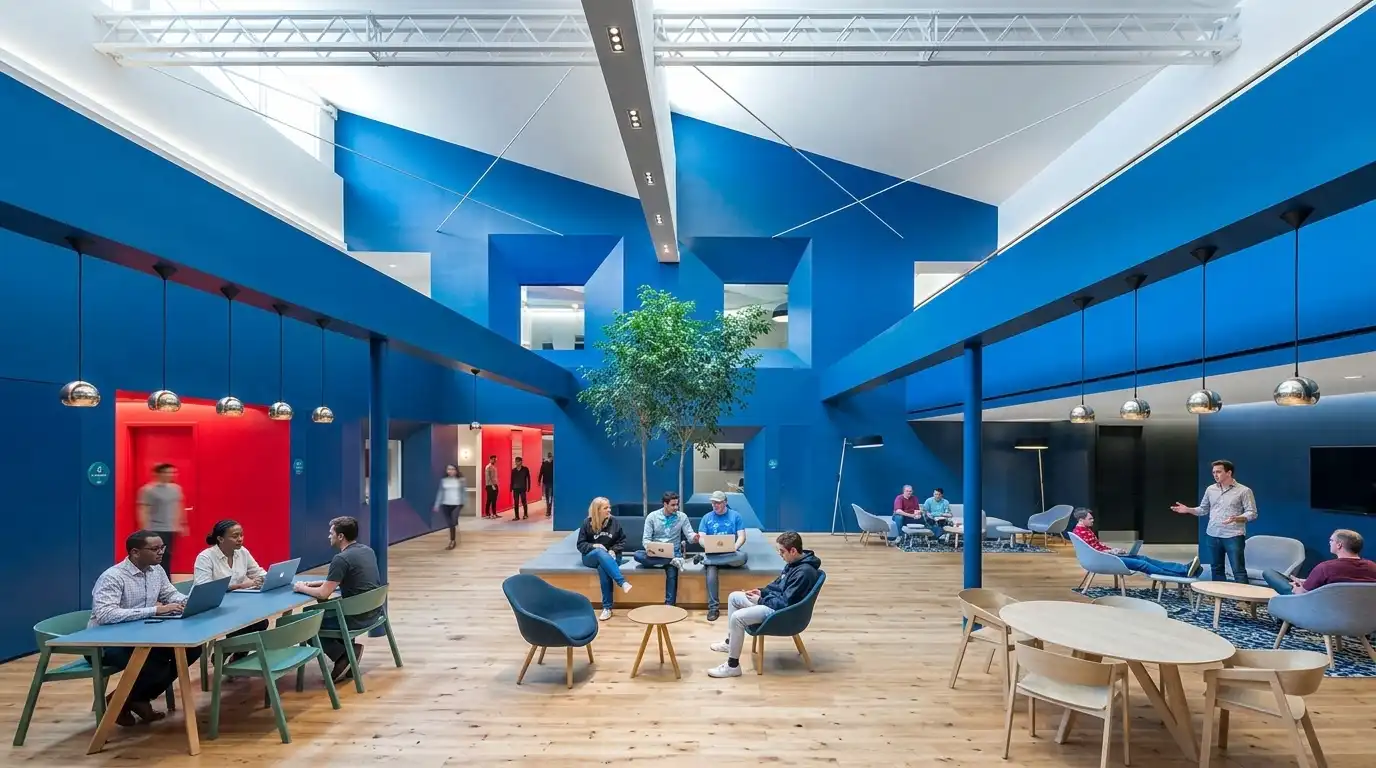
Beats' Culver City workplace shows how a strong brand can shape an office without turning every surface into advertising.
Bestor Architecture developed a large workplace campus intended to connect research, design, development, and other teams. A central circulation axis encourages interaction between departments, while individual work zones are broken up by lounges and breakout spaces. The architecture also uses color and pattern in ways that connect naturally with the Beats identity.
Its strength is restraint. The visual relationship with the brand is clear, but the environment still functions as a professional workplace rather than a showroom.
Color, material choice, scale, and circulation do most of the branding work.
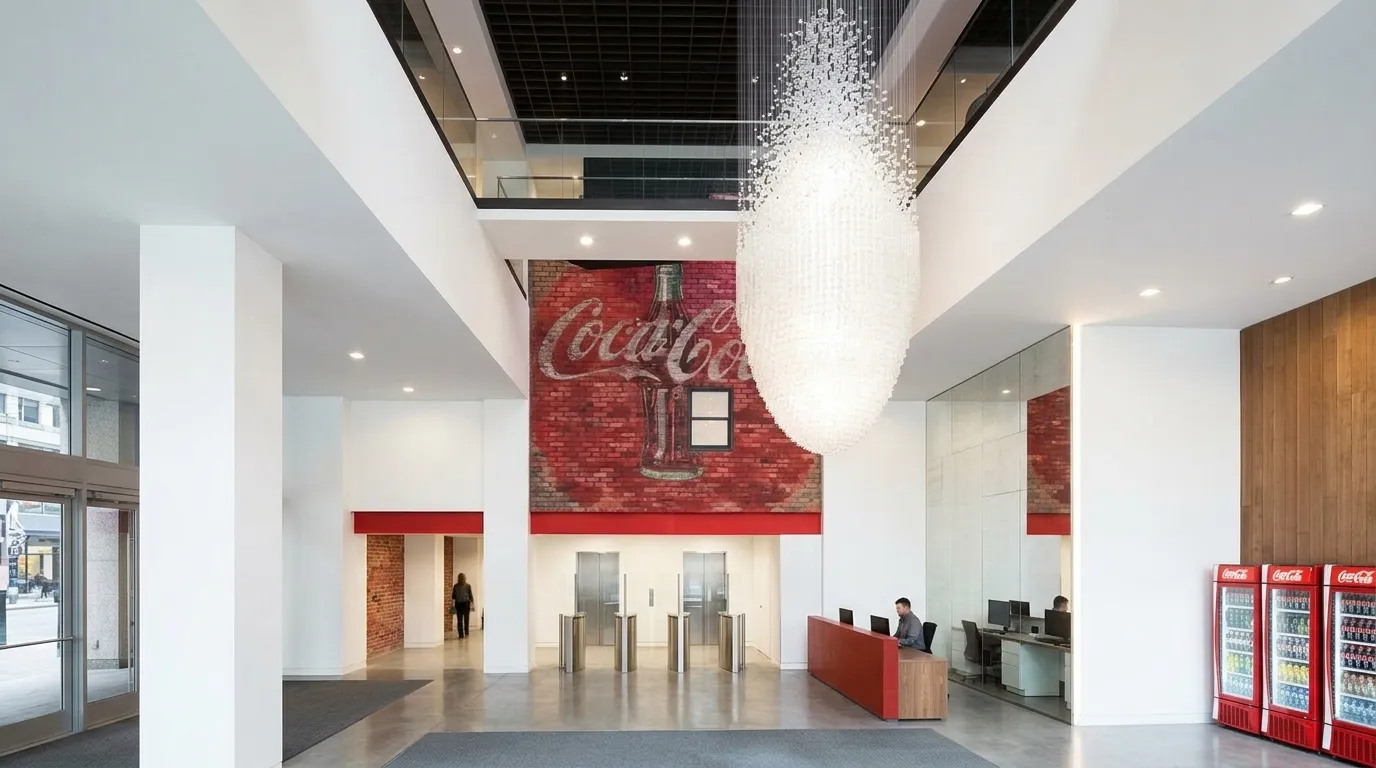
Coca-Cola's London office demonstrates how an established company can adapt an older property rather than treating its age as a limitation.
The Wimpole Street project, designed by MoreySmith, combines open office areas, meeting rooms, flexible workspaces, a café, a roof terrace, and visual references to Coca-Cola's history. The building itself combines older architecture with later additions, giving the designers an opportunity to connect historic character with a contemporary workplace.
The project is a useful example of renovation rather than replacement. Existing character remains visible while new workplace functions are layered into the property.
The same principle has particular relevance in Toronto’s commercial core, where adaptive reuse can give older buildings a new workplace function while retaining parts of their existing architectural character. For businesses exploring how an existing space can be updated, ICI Contracting’s office renovation work in Toronto and the GTA provides local construction context for this type of transformation.
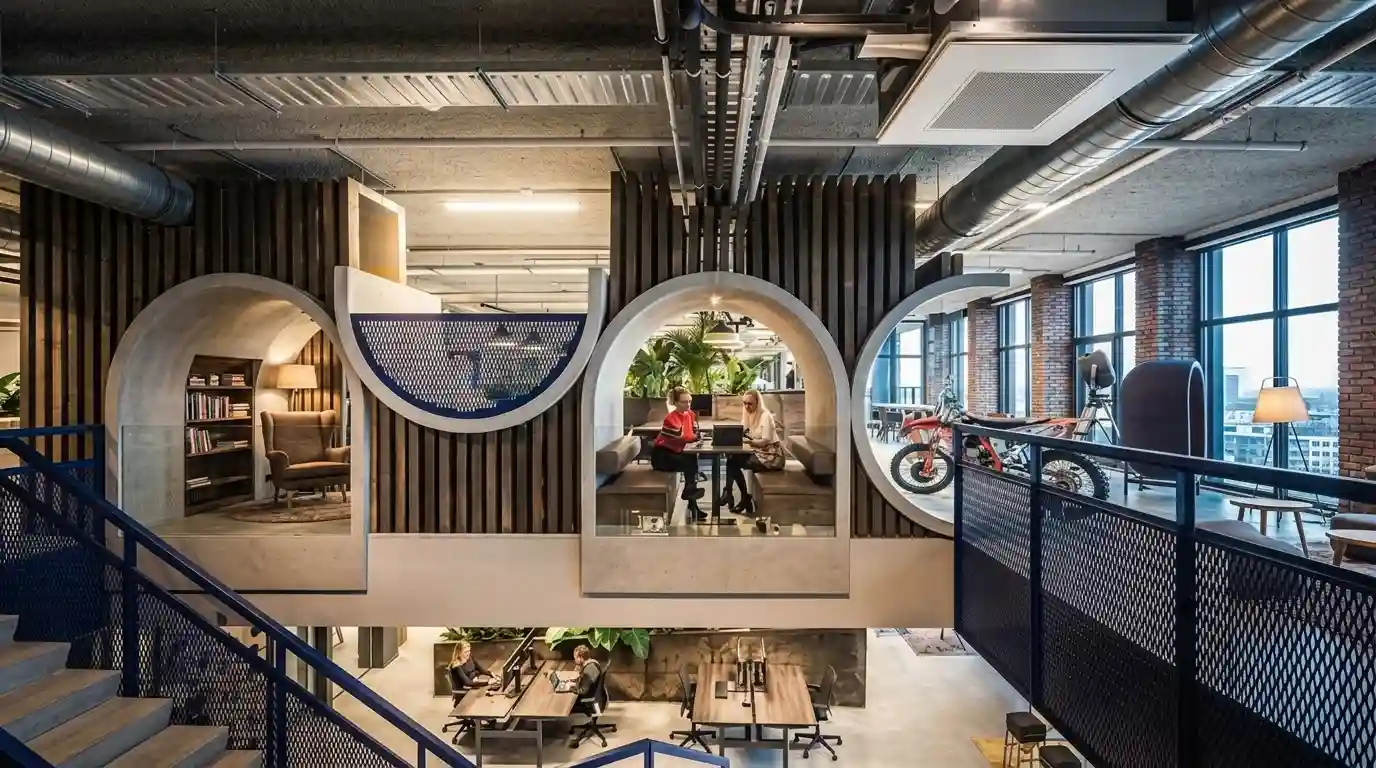
Red Bull's Amsterdam headquarters takes a very different route.
The office occupies a former shipyard, and Sid Lee deliberately used the industrial character of the building as part of the finished environment. The design pairs the raw qualities of the existing property with a workplace intended to reflect Red Bull's unconventional brand personality.
That gives the office a character that conventional luxury finishes would struggle to reproduce.
The project is a useful reminder that high-end workplace design does not always mean marble, polished metal, or formal furniture. A strong architectural concept and an honest response to the existing building can be more distinctive. That lesson also translates well to Toronto, where older industrial and commercial buildings can offer materials, proportions, and architectural details that would be difficult to recreate from scratch. In the right project, retaining those elements can make the existing building part of the workplace identity rather than something the renovation needs to hide.
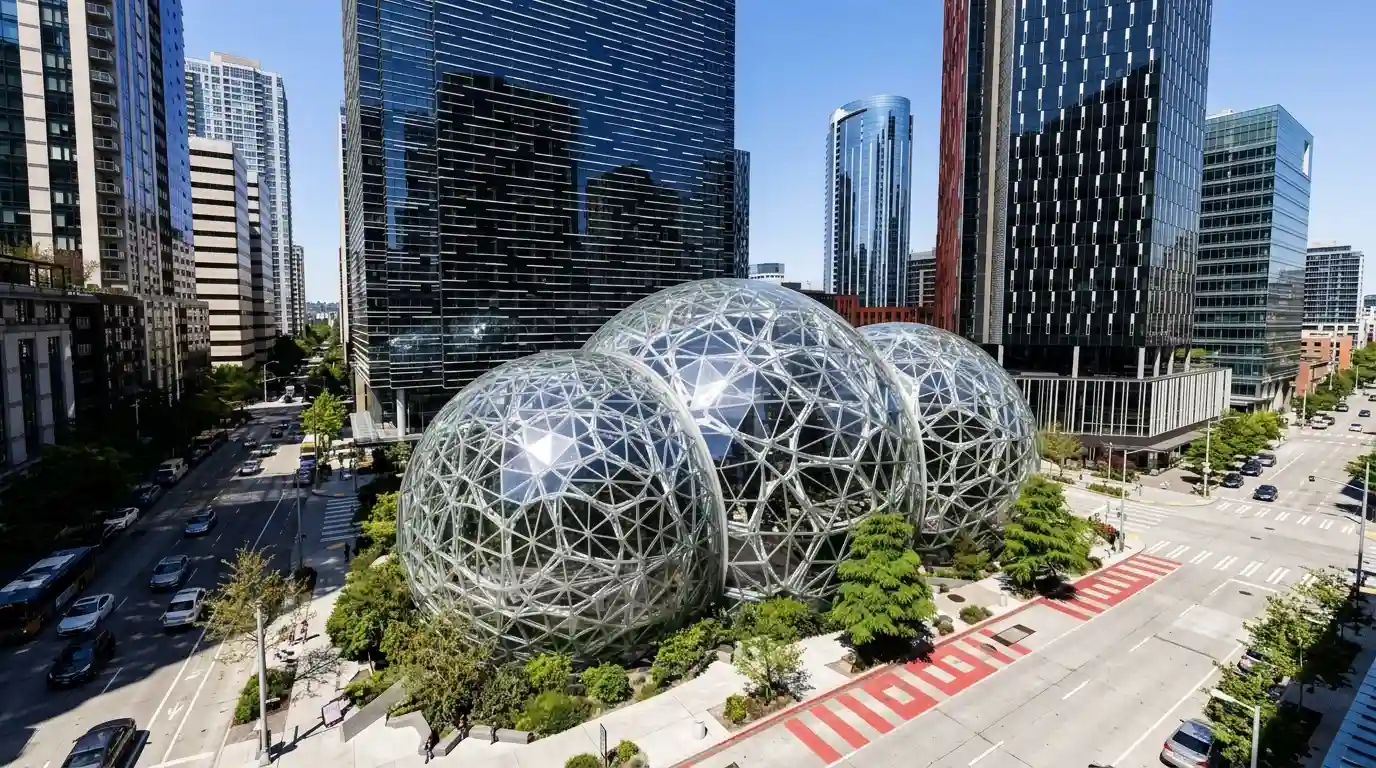
Amazon's Seattle campus brings nature directly into the workplace through The Spheres.
The glass structures contain more than 40,000 plants from cloud-forest regions across more than 30 countries. Amazon describes the concept as a response to something often missing from urban offices: a direct connection with nature.
The importance of The Spheres is not simply the amount of planting. Nature is part of the spatial concept rather than decoration added after the workplace was completed.
Employees can use the environment for work and meetings while surrounded by a dense indoor landscape.
It remains one of the clearest examples of large-scale biophilic workplace design.
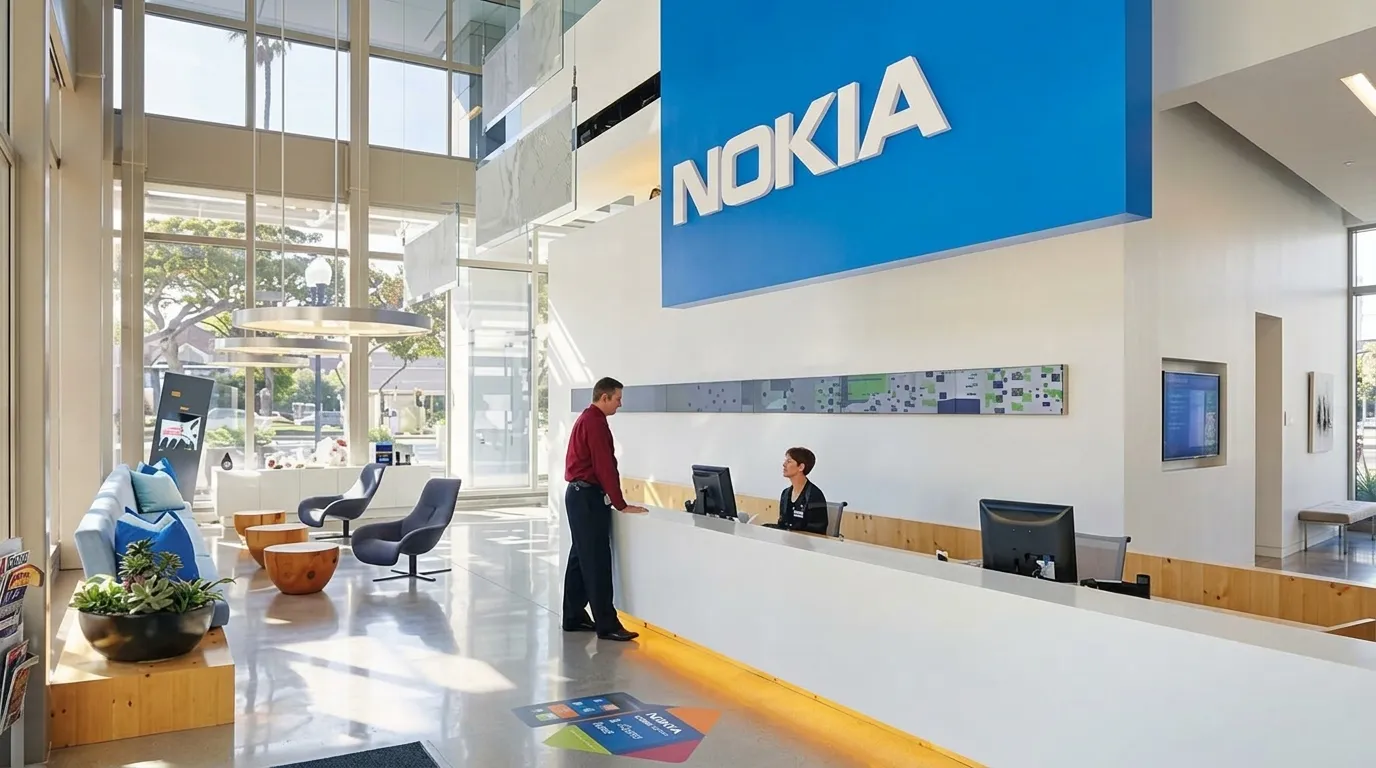
Nokia's Sunnyvale location is one of the company's U.S. workplaces, not its global headquarters.
Nokia confirms that its global headquarters is in Espoo, Finland. The company describes Sunnyvale as one of its U.S. sites and lists amenities there including a meditation room, game rooms, and a fitness center.
This example represents a quieter interpretation of workplace quality.
Rather than relying on landmark architecture, the Sunnyvale site demonstrates how a range of employee spaces can support different needs during the working day.
The practical lesson is simple: amenities are most valuable when people can actually use them.
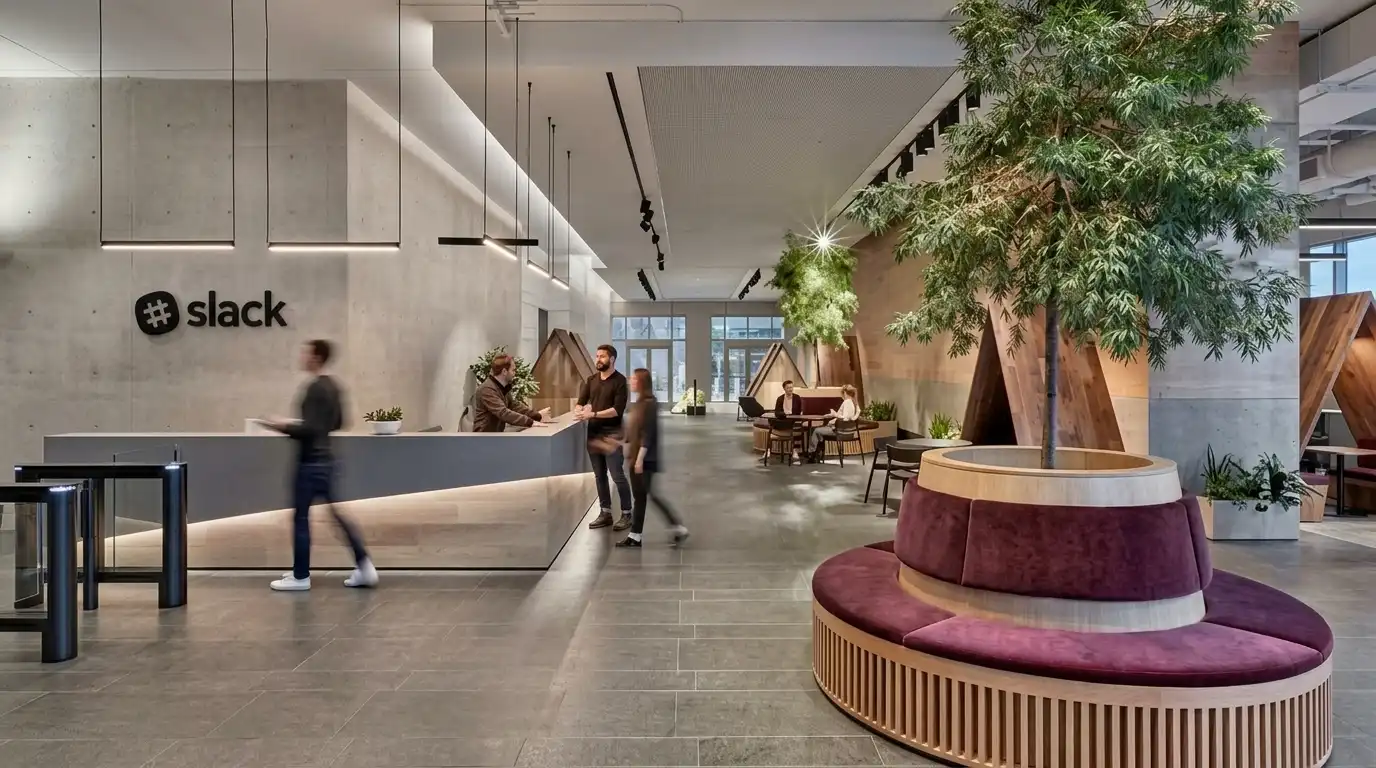
Studio O+A's 2018 headquarters project for Slack used the Pacific Crest Trail as the organizing concept for a large San Francisco workplace.
Different floors interpret landscapes along the route, creating a progression from Baja-inspired settings toward the Pacific Northwest. Studio O+A records the project at approximately 300,000 square feet.
The variation prevents a multi-floor workplace from feeling visually repetitive while maintaining a consistent overall idea.
This is best understood as an influential 2018 workplace project, rather than a claim about Slack's current headquarters.
A local example of multi-floor workplace construction is ICI Contracting's ESML Engineering office project, which involved renovation work across four floors in Toronto.
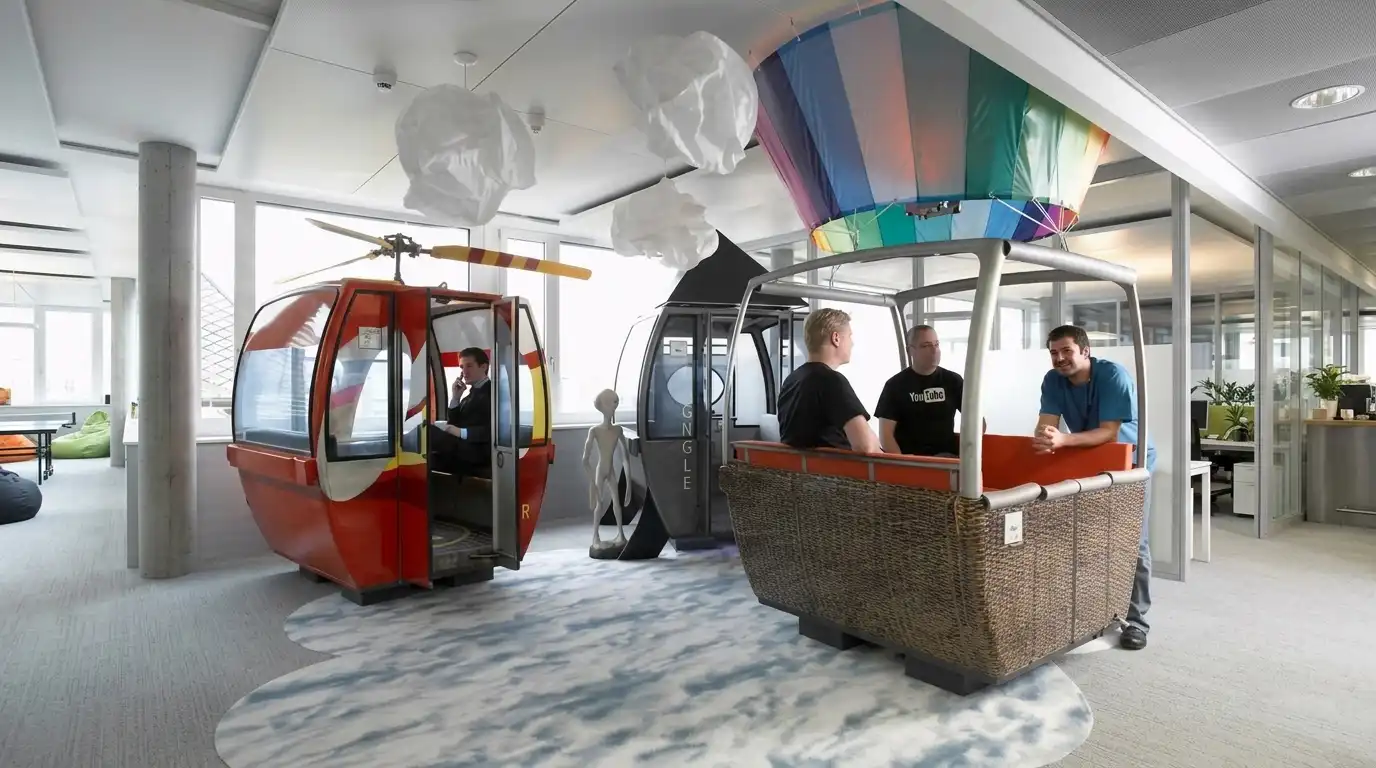
Google's Zurich workplace became one of the best-known early examples of unconventional technology-office design.
Evolution Design completed the 12,000-square-meter project in 2008 after researching employee needs, values, and working preferences. The resulting workplace includes conventional work areas alongside distinctive meeting and retreat spaces, including egg-shaped pods.
Google currently lists two office locations in Zurich, which is why this project should be described as a Google Zurich workplace rather than the company's global headquarters.
Its lasting value comes from the process behind the unusual elements. The designers used employee research and company culture rather than simply copying features from other technology offices.
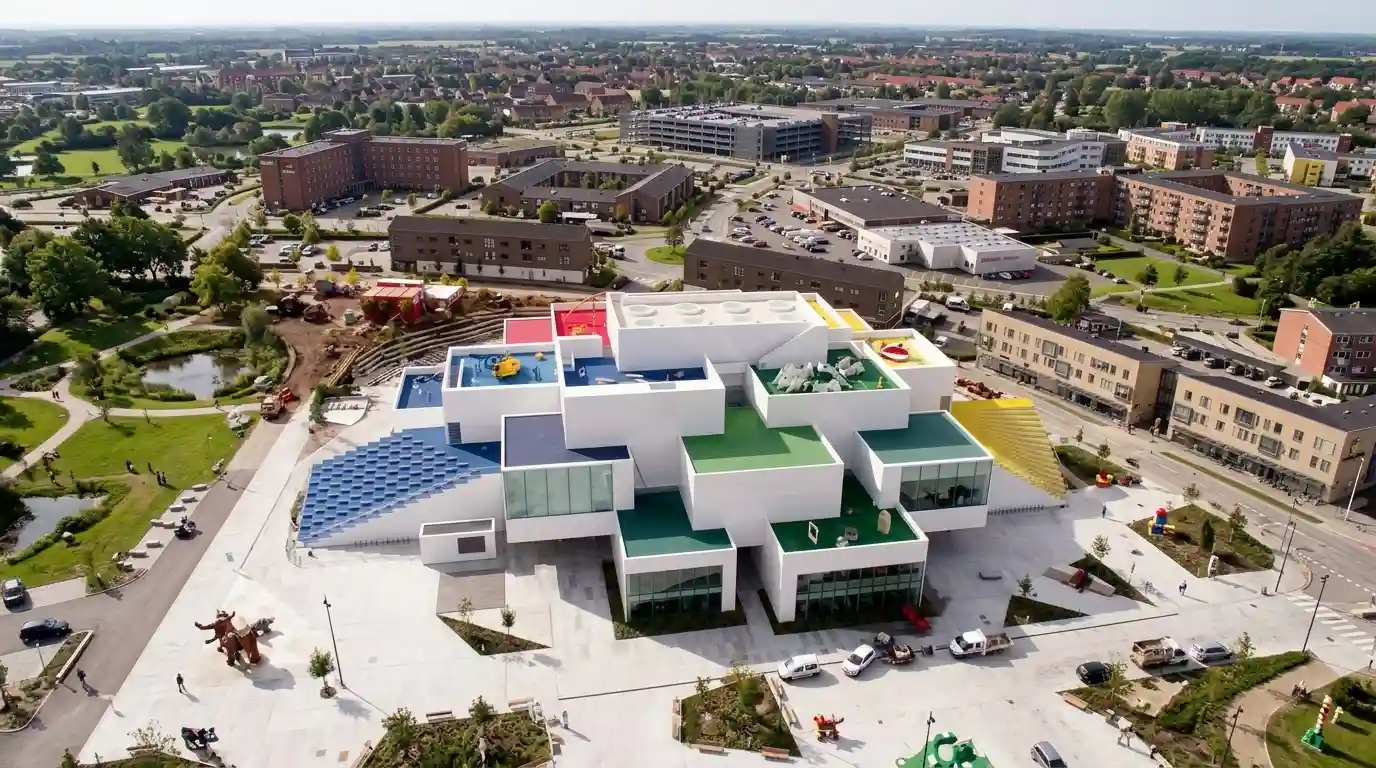
LEGO Campus connects company culture directly to the workplace.
The LEGO Group officially opened the completed campus in 2022. Designed by C.F. Møller Architects, the development covers approximately 54,000 square meters and was created as a workplace for around 2,000 employees.
LEGO describes the campus around company values that include imagination, creativity, fun, learning, caring, and quality.
That thinking influences the physical environment rather than appearing only through decorative references to LEGO bricks.
The campus provides different settings for work, collaboration, social interaction, eating, and breaks, creating a workplace closely connected to the organization behind it.
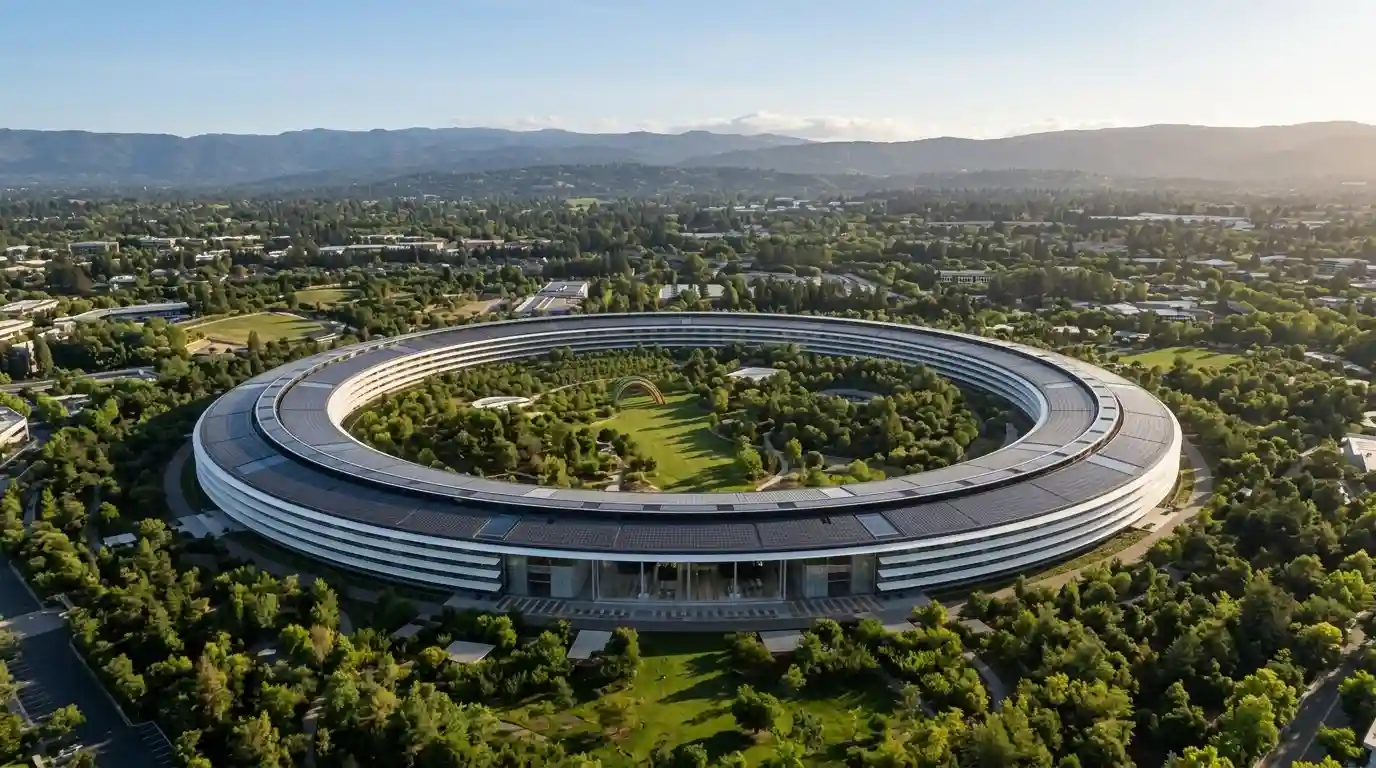
Apple Park is one of the world's most recognizable corporate campuses.
The site covers 175 acres, while its ring-shaped main building contains approximately 2.8 million square feet. Apple said more than 12,000 employees would move into the campus as it opened in 2017.
Curved glass, extensive landscaping, walking and running paths, and the Steve Jobs Theater all contribute to the wider campus experience.
What separates Apple Park from a conventional office development is the relationship between architecture and landscape.
Outdoor space is not treated as whatever remains around the building. It forms part of the workplace concept itself.
Luxury here comes from consistency across architecture, materials, engineering, landscaping, and circulation.
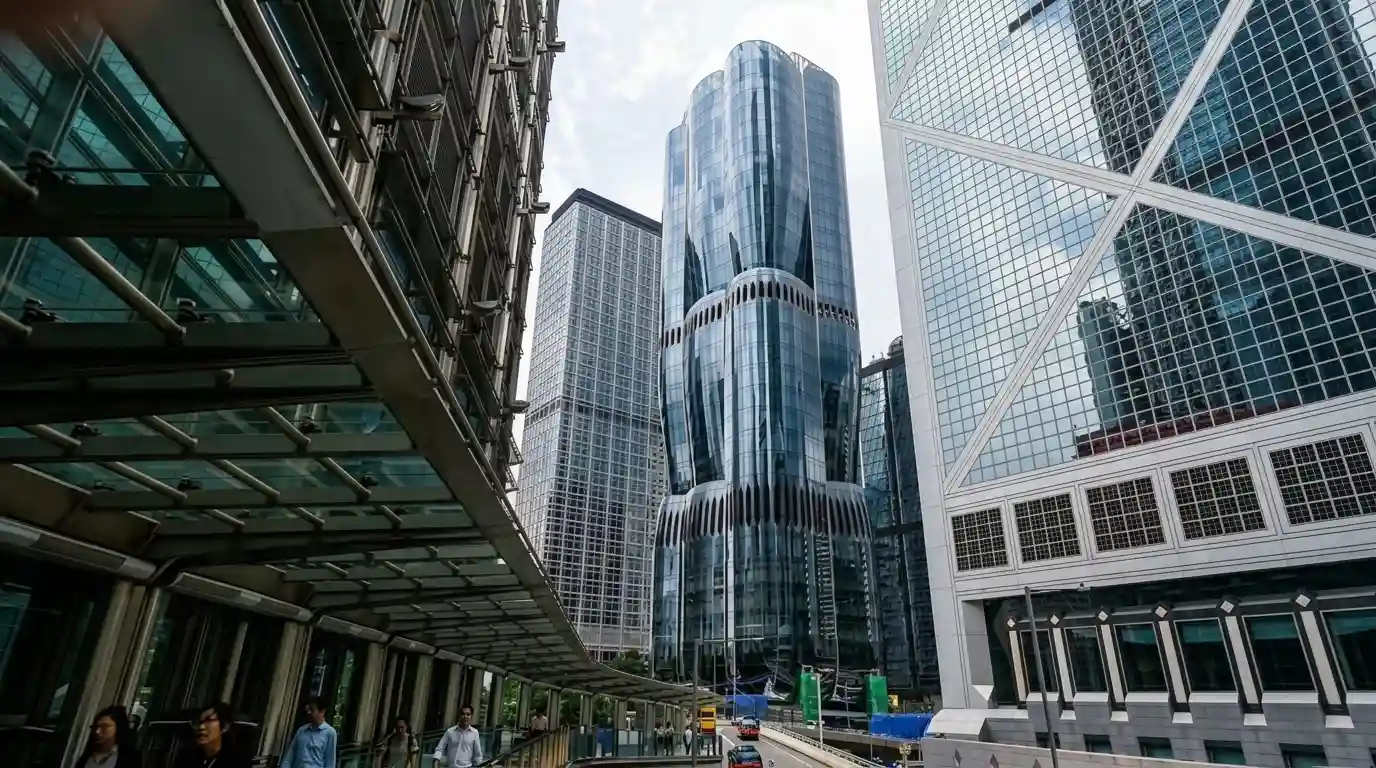
The Henderson stands out before anyone reaches the office floors.
Designed by Zaha Hadid Architects, the tower's flowing form draws inspiration from a Bauhinia bud. The structural concept uses six mega-columns, while the façade contains more than 4,000 curved insulated glass panels.
The building also incorporates smart-office infrastructure, landscaped spaces, digital building management, and flexible column-free office areas.
Unlike Apple Park or BMW Headquarters, The Henderson is not the headquarters of one company. It is a premium commercial office building intended for multiple occupiers.
That distinction matters because the building has to work as both landmark architecture and a flexible commercial workplace.
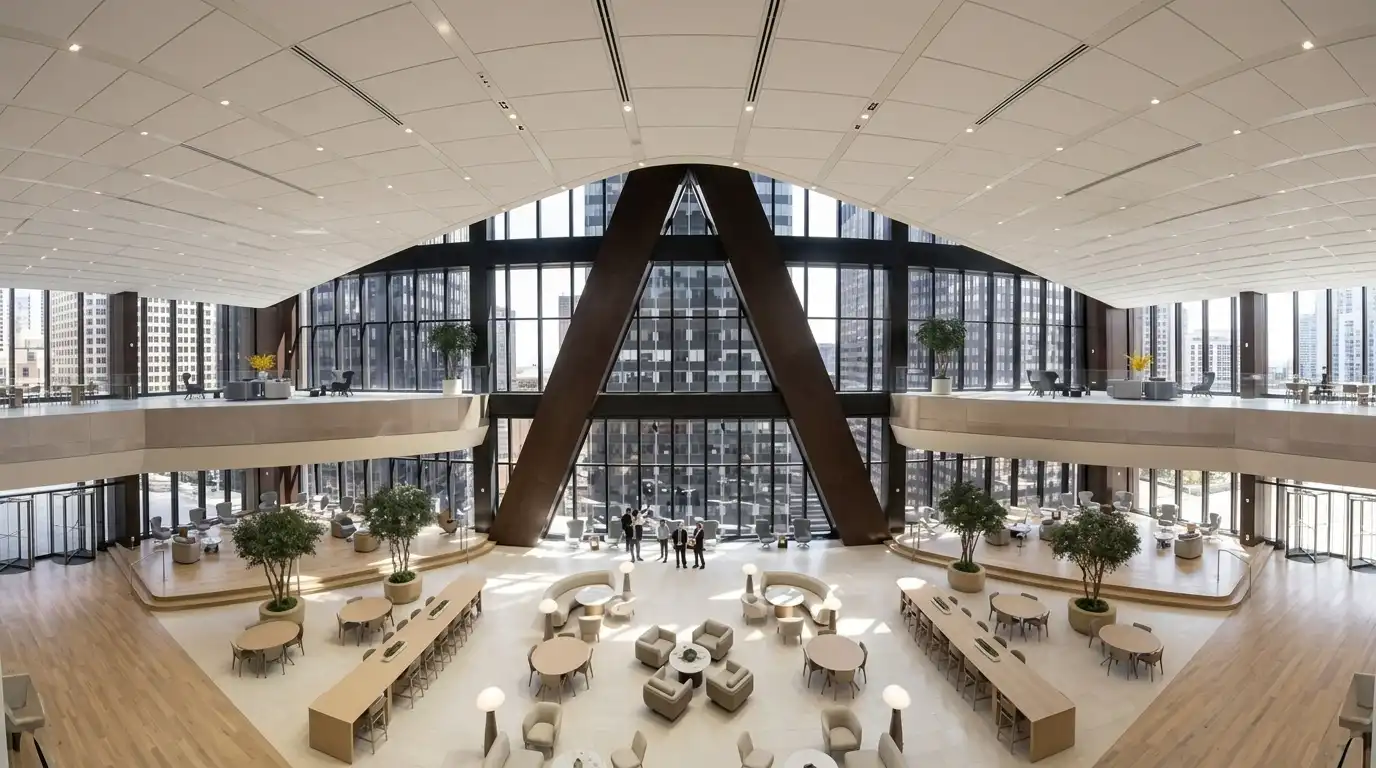
270 Park Avenue is one of the newest projects in this article.
JPMorganChase officially opened its new global headquarters in October 2025. The 60-story building provides approximately 2.5 million square feet of workspace and was designed to accommodate around 10,000 employees.
The tower combines a distinctive fan-column structure with flexible floor plates, smart-building infrastructure, outdoor terraces, employee amenities, and The Exchange, a triple-height space for dining and larger gatherings.
The project represents a newer model of corporate luxury.
Architecture, building technology, wellness, flexible workplace planning, and hospitality are treated as connected elements rather than separate upgrades.
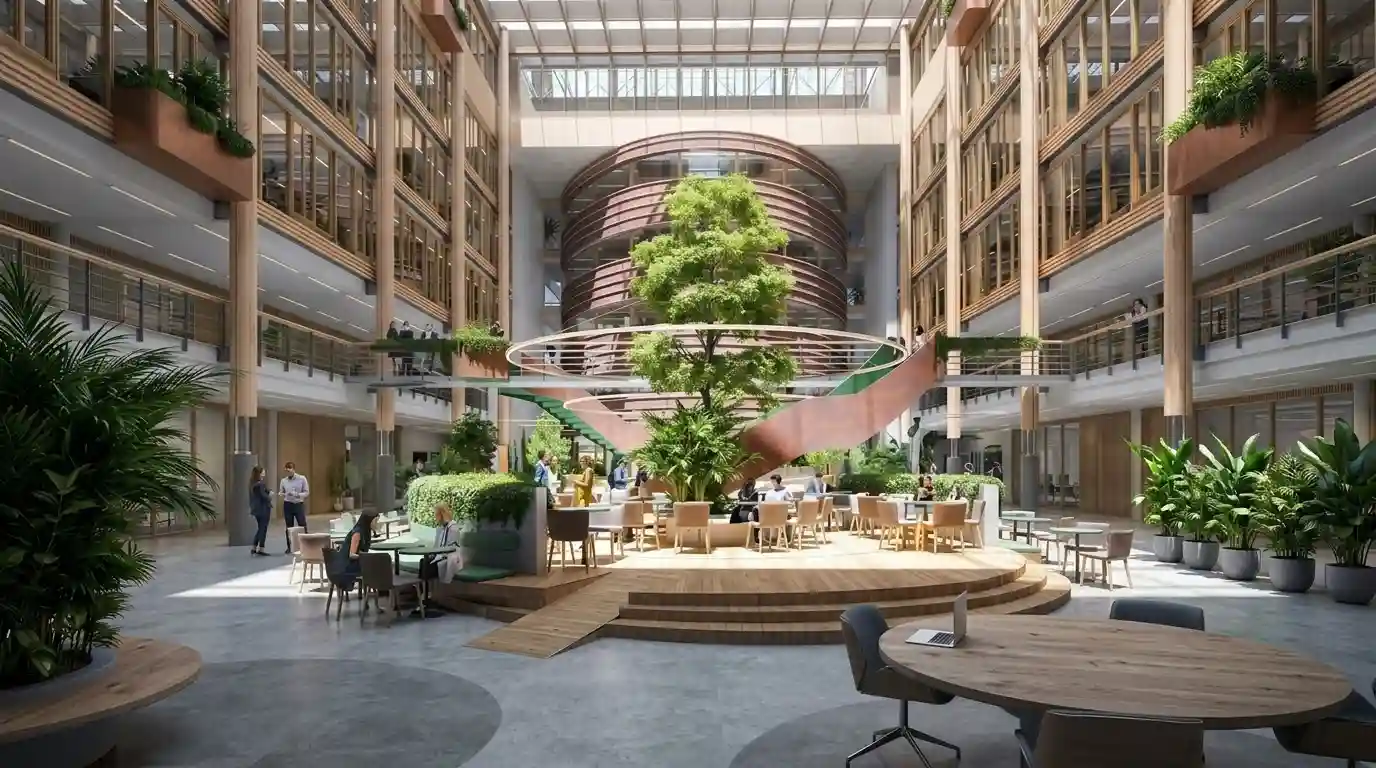
EDGE Stadium demonstrates how an existing office property can be substantially repositioned instead of replaced.
The redevelopment expanded the building from approximately 19,000 square meters to about 29,000 square meters while reusing original building materials and architectural elements. The completed property incorporates a large atrium, biophilic design, flexible workplace areas, and a roof terrace.
EDGE also reports WELL Platinum and BREEAM Excellent certifications for the property.
Its relevance comes as much from reuse as luxury.
A premium workplace does not always require demolition and a completely new structure. An existing commercial building can provide the basis for substantial improvement.
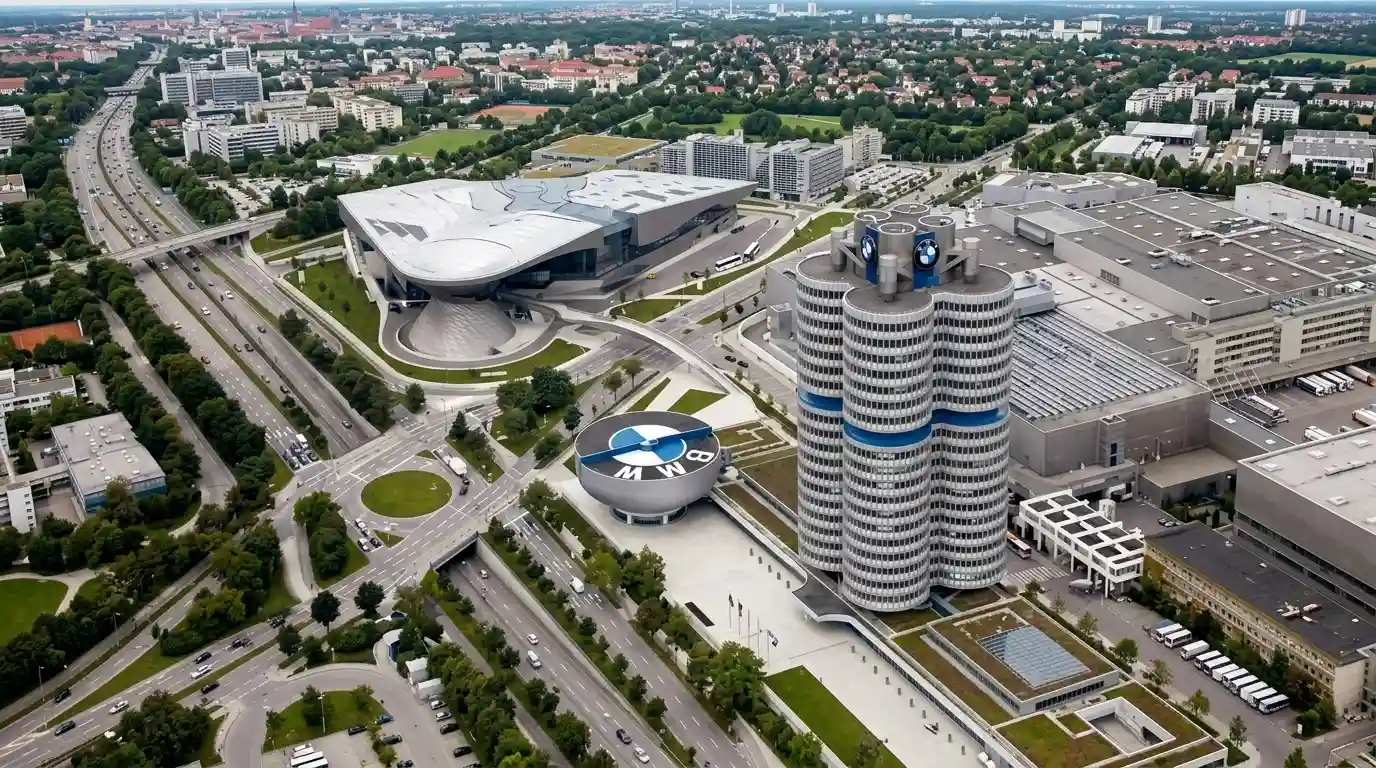
BMW Headquarters shows that landmark workplace architecture does not have to be recent.
Designed by Austrian architect Karl Schwanzer, the Munich building is 99.5 meters high and has 22 floors. Its four cylindrical sections have become one of BMW's most recognizable architectural symbols and a defining part of the Munich skyline.
The headquarters officially opened in 1973. BMW's historical documentation confirms Karl Schwanzer as the architect and the building's 99.5-meter height and 22-floor configuration.
More than five decades later, the building remains closely associated with the brand.
Its architecture, rather than a list of modern amenities, is what gives the workplace its lasting identity.
The most luxurious offices in the world do not follow one formula.
Apple Park, Google Zurich, Red Bull Amsterdam, EDGE Stadium, and BMW Headquarters look almost nothing alike. What they share is a clearer relationship between the workplace and the purpose it serves.
For readers looking at the construction side of these environments, our guide to commercial construction explains how commercial projects move from planning and consultant coordination through construction and closeout.
Generic offices are easy to forget.
The examples in this article establish identity in different ways: architecture at BMW, landscaping at Apple, industrial character at Red Bull, company culture at LEGO, and environmental variation at Slack.
A recognizable workplace does not require oversized logos. Materials, circulation, color, lighting, architecture, and spatial character can communicate identity more subtly.
A workstation is only one part of contemporary office planning.
The projects above combine focused work areas, collaboration spaces, meeting rooms, lounges, cafés, terraces, wellness areas, and informal gathering spaces in different ways.
The value of that variety is practical. Different tasks require different settings, and a workplace can respond to that instead of expecting one environment to do everything.
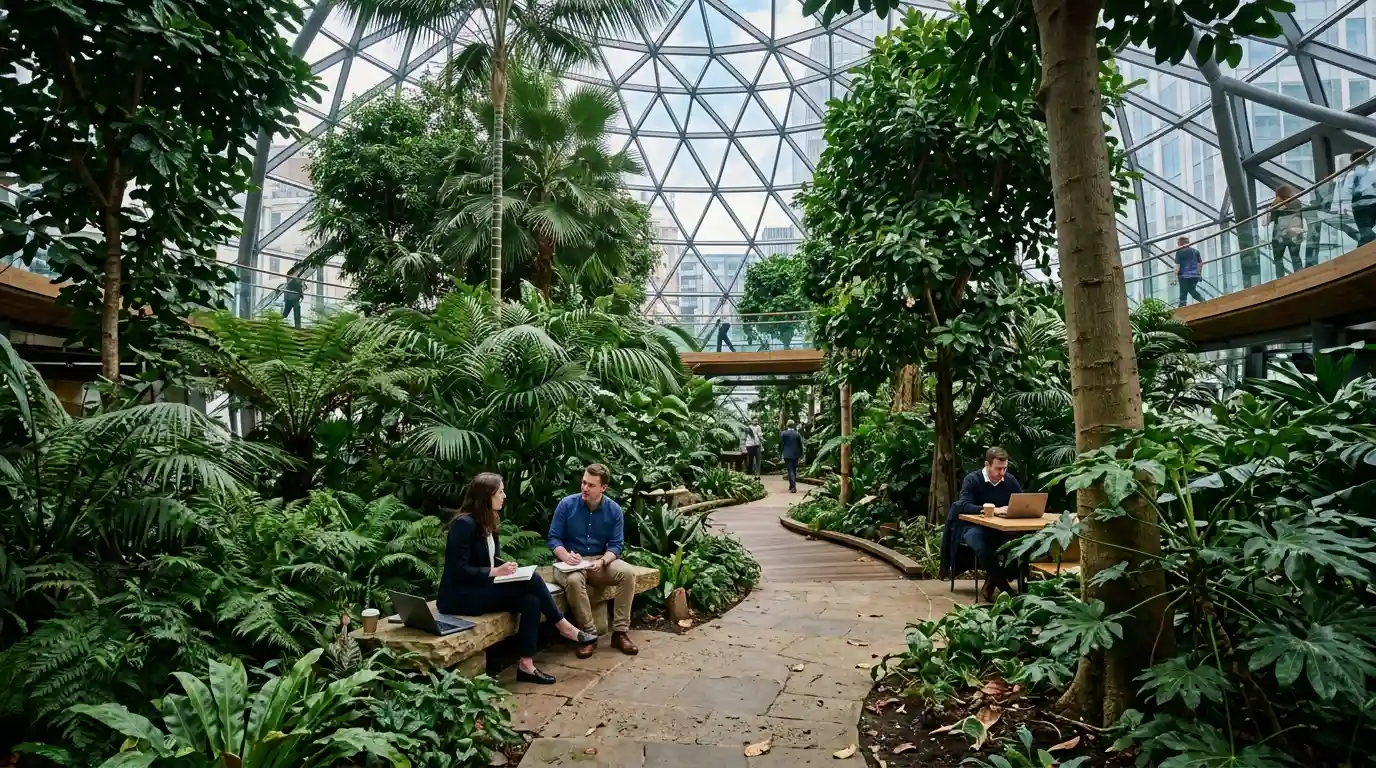
Amazon's Spheres provide the most dramatic example, but similar thinking appears at Apple Park, EDGE Stadium, and other projects.
Natural light, planting, outdoor areas, landscaping, natural materials, and visual connections with nature have become increasingly visible in premium workplace design.
The scale can vary enormously. Biophilic design does not require building an indoor forest.
In newer projects, workplace technology goes beyond monitors and conference-room equipment.
Buildings such as 270 Park Avenue and The Henderson integrate digital infrastructure, access technology, environmental controls, connected devices, and building-management systems into the property itself.
That integration makes technology less visible while giving it a larger role in how the workplace operates.
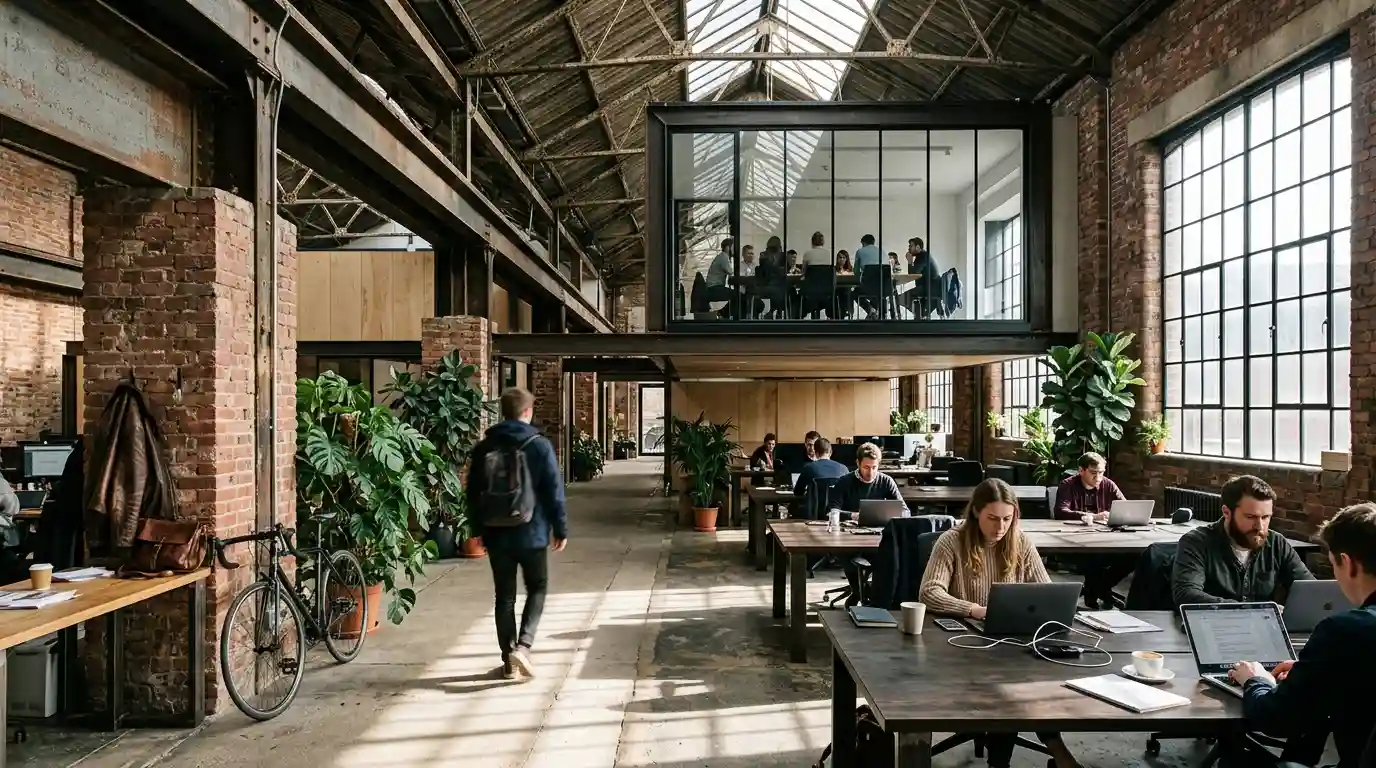
Several projects in this list did not begin with a completely new site.
Red Bull adapted a former shipyard. Coca-Cola's London workplace reused an existing building. EDGE Stadium retained significant parts of an existing commercial property during a major redevelopment.
For Toronto businesses, the broader lesson is that an existing property should be evaluated for what can be retained, adapted, or improved before assuming that a premium workplace requires starting over.
A Toronto business does not need Apple Park's scale or The Henderson's architecture to learn from these projects.
The useful question is not, "How can we copy this office?" It is, "Why does this feature work?"
A smaller workplace may benefit more from better meeting-room acoustics, improved natural light, useful staff areas, clearer circulation, or flexible collaboration spaces than from expensive decorative finishes.
Brand identity can also be expressed quietly through materials, signage, lighting, reception details, color, and the relationship between different areas.
The starting point should be the business's actual needs, the existing property, available drawings, budget, and construction scope.
A commercial general contractor in Toronto and the GTA can coordinate construction with the approved project documents, consultants, trades, property-management requirements, and site conditions.
The most luxurious offices in the world are not impressive for the same reason.
Apple Park is shaped by architecture and landscape. Amazon integrates an extensive natural environment into its Seattle campus. LEGO connects workplace planning with company culture. BMW relies on an architectural concept that has remained recognizable for decades. 270 Park Avenue combines contemporary architecture with technology, amenities, and flexible workplace infrastructure.
The common thread is intentionality.
Strong workplaces use space, materials, technology, amenities, and architecture to support a clear purpose rather than adding expensive features simply to look luxurious.
For businesses in Toronto and the GTA, that principle applies at a much smaller scale. Start with how the workplace needs to function, then determine which design and construction decisions support that goal.
For businesses moving from workplace inspiration into project planning, ICI Contracting’s commercial office renovation services explain how the construction side of an office transformation is approached in Toronto and the GTA.
There is no objective single winner.
Luxury can be judged by architecture, interior quality, amenities, workplace technology, sustainability, landscaping, scale, or the overall experience of a building.
Apple Park, The Henderson, 270 Park Avenue, LEGO Campus, and Amazon's Seattle campus represent very different interpretations of a premium workplace.
A luxury office usually combines high-quality architecture or interiors with practical workplace features.
Natural light, comfortable work areas, useful meeting rooms, thoughtful materials, acoustic planning, technology, outdoor space, and employee amenities can all contribute.
Expensive finishes alone do not necessarily make an office better.
Apple, Google, Amazon, LEGO, Red Bull, BMW, Slack, Beats, and JPMorganChase have all commissioned notable office or headquarters projects.
What makes them interesting is that they do not follow the same design formula. Each uses architecture or interior design to establish a recognizable workplace identity.
No.
Premium materials can contribute to the overall result, but good workplace design can also come from natural light, adaptive reuse, spatial planning, acoustics, landscaping, flexible layouts, and carefully considered details.
A visually expensive office with poor circulation or inadequate meeting space can still function badly.
Yes.
A smaller workplace can apply the same underlying principles without copying the scale or budget of a major corporate campus.
Better lighting, flexible work areas, useful meeting rooms, improved acoustics, clearer circulation, and thoughtful material choices can all make a meaningful difference.
The goal is to identify which ideas fit the business, property, employees, and budget.
Biophilic ideas have become increasingly visible in prominent workplace projects.
Amazon's Spheres are one of the clearest examples, with more than 40,000 plants integrated into the environment. Apple Park and EDGE Stadium take different approaches through landscaping, daylight, outdoor space, and planting.
Yes, depending on the building and proposed scope.
EDGE Stadium retained and reused significant parts of an existing office property during redevelopment, while Red Bull's Amsterdam headquarters adapted a former industrial site.
Existing buildings can also offer architectural character that would be difficult or expensive to reproduce in a completely new property.

Planning a commercial renovation, clinic upgrade, industrial improvement, or residential project? Speak with our team about your requirements, timeline, and next steps.